







Freies Magazin FM5

Plattform für Kunst und Jugendkultur

ohne Nav

FM5 erscheint am 1. Montag jedes Monats neu..

reportagen

Schwerpunkt: For a West/Islam dialogue instead of cartoons

Islamophobia as neo-orientalism

  • Daniel Pipes

Islamophobia can be described as attitudes or actions. As attitudes it sees Islam e.g. as a retarded monolithic block remote from Western values and permeable to progressive change. This conception is spreading in the West, by means of neo-orientalism.

Islamophobia is threatening to flourish, particularly in Western societies. It is a concept that is difficult to define, and the attempts to define it have been criticised.


Islamophobia


A UK-based NGO, The Runnymede Trust, published a study in 1997 entitled “Islamophobia: A Challenge for Us All” where it defines islamophobia with the following characteristics: Islam is seen as a monolithic bloc, static and unresponsive to change; Islam is seen as separate and “other”; it does not have values in common with other cultures, is not affected by them and does not influence them; Islam is seen as inferior to the West; it is seen as barbaric, irrational, primitive, and sexist; Islam is seen as violent, aggressive, threatening, supportive of terrorism, and engaged in a clash of civilizations; Islam is seen as a political ideology, used for political or military advantage; criticisms made of 'the West' by Islam are rejected out of hand; hostility towards Islam is used to justify discriminatory practices towards Muslims and exclusion of Muslims from mainstream society; anti-Muslim hostility is seen as natural and normal (5).


Another pertinent publication on islamophobia comes from the European Union Monitoring Centre on Racism and Xenophobia (6). It distinguishes between attitudes and actions against individuals.

Thus, JP and co. are not actively discriminating Muslims, but the publication of the cartoons – for the reasons they were published, and precisely in the context they were publish – contributes to the spread of islamophobia as an attitude.


Neo-orientalism


This islamophobia is perhaps fashioned by an already existing orientalism – orientalism in literature that transformed into orientalism and neo-orientalism in political science.


Orientalism was characterised, as in the famous book by Edward Said, by old-fashioned and prejudiced Western interpretations of Eastern cultures and peoples. In a romantic vein, it is e.g. The Turkish Bath by Ingres: Orient associated with lascivious eroticism.


Nowadays, the same prejudiced interpretations persist, albeit in a negative form. Many see Islam as limited to the Middle-East, oppressing women, as corresponding to a less advanced stage of Western civilisation (i.e. the Middle-Ages), as a unity, epitomised by the radicals and extremists, etc.


Orientalism and Neo-orientalism appeared in Middle-East academic experts circle as two ways to explain the alleged impossible democratisation of Muslim countries (7). For orientalists, it was the "weak society" that explained this. With the "weak society" making a revolution in Iran in 1979, the paradigm had to be thought anew. Neo-orientalists now believe that the reason why Muslim countries are resilient to democratisation is exactly the opposite: a "weak state".


The problem is that these Neo-orientalists are influential in US policy circles. The most famous of them are Daniel Pipes, Patricia Crone, Michael Mann, José Ghilerme Merquior, and John Hall.


But why is Neo-orientalism so influent? One possible answer is that seeing Muslim countries this way and associating them with barbarism, provide a strong symbolic violence in Western imaginaries. This serves as a hegemonic strategy for legitimising colonialist economic or political projects (8). In other words, since the end of the cold war and 9/11, there is a hegemonic Western centre that is facing "irrationality", and "anarchy" in the non-Western periphery, which has to be "rationalised" and "ordered" in order to avoid a "clash of civilisations". 


Recent examples


It seems that in the West Islamism and Islam have become wastebasket names for all our fears. How else can we explain this persistent repression of facts such as: the democratic movements in e.g. Indonesia, Malaysia, Morocco, Egypt; a third of all Muslims living in democracies? (9) (Of course, not all is well as in Indonesia, for instance, a new Islamic court is chasing non-married couples in the streets to sentence them to cudgel if they are ostentatiously showing signs of physical affection.)


No. It seems Islam is doomed to be eternally associated with backwardness and despotism, not with progress and democracy.


The recent election in Turkey shows exactly just this. It was largely reported in the Western media as a threat of the Islamic party winning in the country. The Kemalists were, and have always been, painted as the true democrats, and the AKP was portrayed as the Islamic threat. However, it was the AKP in power for the last years that is responsible for economic growth, ties with the EU and negotiations on its membership, better relations with the US and Israel. And what did the Kemalist party do? A dubious politics of religious intolerance, ethnic preference and brought state finances close to disaster.


The West also has countries with strong religious groups in political power (e.g. the US, Poland, Israel; many European states have a state religion such as the UK or Scandinavian countries). But we don't see them the same way, do we? Isn't it then that Islam is being regarded this way just because it is, say, "different"? 


The West on the couch


To answer this, I push forward the thesis of the repression of a latent orientalism in our Western conscience. It is more than time to lie on the couch (metaphorically speaking, but you do as you like) and talk about it... with true moderate Muslims. 


The Enlightened West should not fall again into ages of ignorance and neglect of reason. A better informed public opinion about Islam should ease a constructive dialogue with the Muslim world.


Notes:


(5) http://www.runnymedetrust.org/publications/pdfs/islamophobia.pdf

(6)http://eumc.europa.eu/eumc/material/pub/muslim/Manifestations_EN.pdf

(7) Sadowski, Yahya. "The New Orientalism and the Democracy Debate". Middle East Report, No 183, Political Islam. (Jul.-Aug., 1993), pp. 14-21+40.

(8) Tuastad, Dag. "Neo-Orientalism and the new barbarism thesis: aspects of symbolic violence in the Middle East conflict(s)". Third World Quaterly, Vol. 24, No 4. (2003), pp. 591-599.

(9) Source: Aslan, Reza, "State of Belief", Time Magazine, August 6, 2007.

http://www.time.com/time/magazine/article/0,9171,1647252,00.html


Vorschau Bild: "Le Bain turc," (Turkish Bath) by Jean Auguste Dominique Ingres, painted 1862.

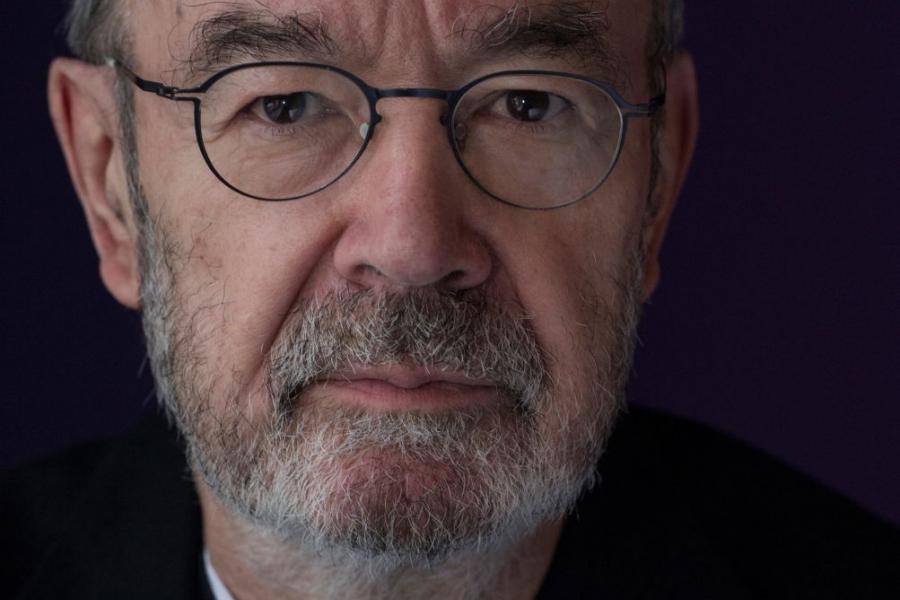
Bild 1: Daniel Pipes at a speech in Copenhagen 11th Marts 2007 on receiving his "Free Speech Award".


Printer Icon


AutorIn(nen)

Frank Ejby Poulsen

Frank Ejby Poulsen

Kosmopolitisch-Europäisch-Dänisch-Französisch-Ich.

Studied law in Paris, public administration in London, and currently political science in Copenhagen. Speaks French, Danish, English, Spanish, and learning German. Looking for a great job in Vienna...

Newsfeed Icon Newsfeed von Frank Ejby Poulsen abonnieren


[kommentar verfassen]

Kommentare


Mali: eines der ärmsten Länder Afrikas

Alles ist wunderbar und Archive

Ein bisschen zerlumpt, aber mit ganzem Herzen


Archiv  | Impressum | AGB | Nolabel | Gewinnspiel | Friends Shop